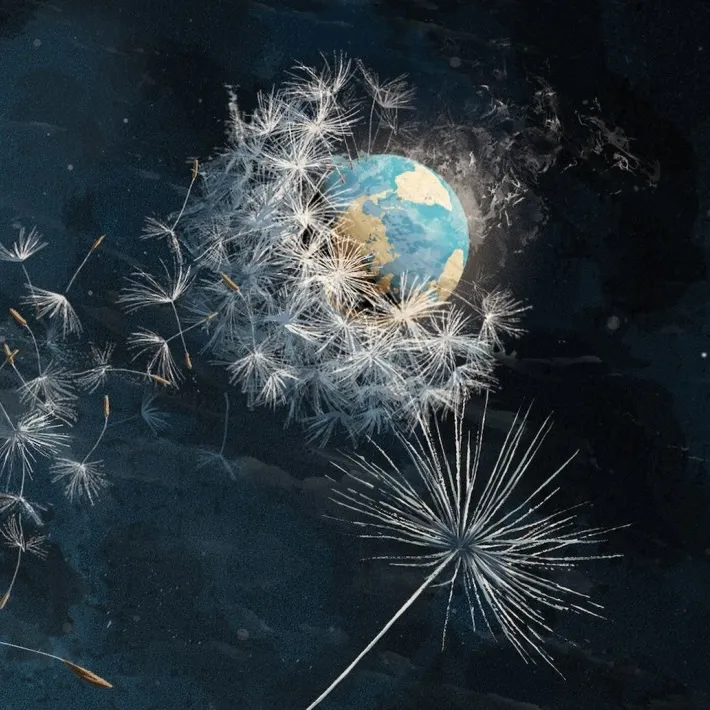
In A Half-Built Garden, a giant spaceship lands on Earth in the near-ish future, and the aliens make contact with humans, proposing to rescue us from the climate crisis by welcoming us to their civilization. There are two species of aliens, and they’ve learned to live in symbiosis onboard space stations, choosing to abandon their respective home planets because of ecological decline. Conflict arises because the humans—represented by the narrator Judy and her family—have a desire to stay on Earth. The systems that created the climate crisis, in this imagined future, have been dismantled, and people are learning how to live in a sustainable society.
Having been a long-time Star Trek fan, I’ve seen many versions of the first contact story. In Star Trek, it usually plays out with the human protagonists meeting a previously unknown species of alien, and then learning a lesson by interacting with the aliens and understanding some crucial difference in their way of life. From a storytelling perspective, even though the human crew is living in a utopia future, they tend to represent the traditions that we hold in the real world, while the aliens represent more progressive ways of life. (For example, see “The Outcast,” in which Riker falls in love with a non-binary person.)
The interesting thing about A Half-Built Garden, which makes it unlike anything I’ve read before, is that the roles are almost reversed. The aliens run their society in a hierarchical way, with mothers holding the most power. It feels familiar enough to our social structures, whereas the human species have changed their society so much that they are the ones that feel alien.
In late August 2025, the release date of Hollow Knight: Silksong, one of the most highly anticipated video game sequels ever, was announced: September 4[^hollowknight-1]. Foolishly, I thought to myself, “Hey, maybe I can play the original Hollow Knight in the couple of weeks before Silksong comes out.” I’d always heard good things about it, even though I wasn’t aware of quite how big the fandom is. And, it turns out, how big the game itself is… unless I were to spend almost all of my waking hours playing, there was no way I would have finished it before the sequel’s release.
I had actually tried Hollow Knight briefly when I bought it earlier that summer, but had shifted my attention to another game, because Steam sales inevitably result in a big batch of titles landing in your lap all at once, and you just have to try them all.
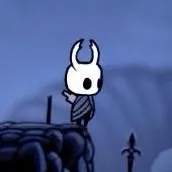
The beginning of Hollow Knight can feel a little unwelcoming. You control a little bug, and you start off being only able to jump and hit enemies, which are other little bugs that crawl around in a dark grey world. The 2D levels are mazelike and I didn’t know where I was supposed to be going. Frankly, in the first 30 minutes of the game, I didn’t think there was much to it, and it didn’t seem that fun.
Little did I know how much bigger it would get: the variety of the world’s design keeps growing and growing as you explore, and the gameplay changes whenever your character gains a new ability.
Little did I know that would end up becoming one of my all-time favourite games.
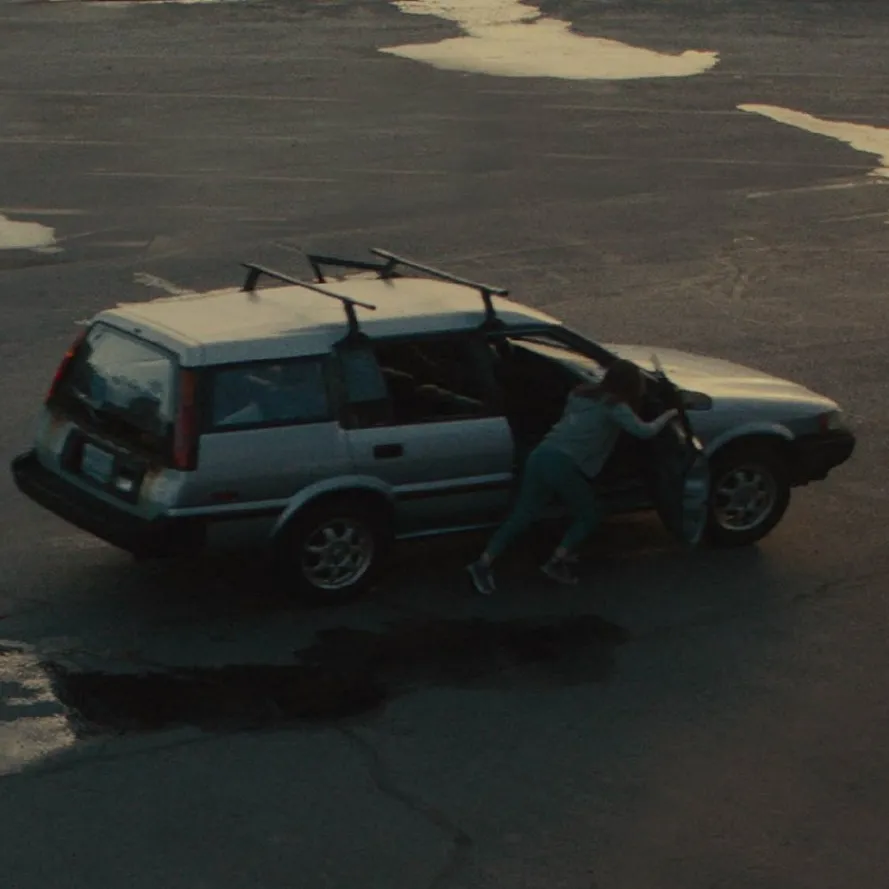
Omaha starts with a father waking up his two kids and wrangling them into their old busted car in a big hurry. They’ve been evicted from their home and as they drive away, there’s a real sense of dread. I, as the viewer, already knew within the first five minutes that it wasn’t going to end well for them, and I spent the (mercifully short) runtime of the film holding my breath and waiting for the ultimate tragedy to be revealed.
The family visits various pit stops and motels along the way to their unknown destination, and the father tries and barely succeeds at pretending that everything is fine. The three performances are the highlight of the film. I often have a hard time with child actors: they’re not always believable, simply because they haven’t had the time to hone their skill; but, when they are convincing, I worry that it’s because they’re experiencing the emotions for real, too young to know that it’s only pretend. Omaha falls in this latter camp, and because of the traumatic circumstances depicted in the film, I hope the two kids (Molly Belle Wright, Wyatt Solis) are okay.
I have no reservations about the performance of John Magaro as the father. The film doesn’t make it clear how the family ended up in trouble, but it doesn’t matter, because he embodies the desperation and fatigue and pain of the backstory. It’s all in his eyes and the way he breathes.
The movie ends with a title card that explains some real-life context. I won’t spoil it but you can read about it here. Omaha shines a spotlight on a specific social issue, and transforms it into an emotional experience. It’s a tough but edifying watch.
Last fall, I travelled to Italy and purchased a few books by Italian authors. The Singularity by Dino Buzzati tells the story of a secretive government project taking place at a military base. At the beginning of the novel, we follow an engineer named Ismani who has been recruited into the project, but is told nothing about what he’ll be doing. The first third of the book has a satirical bent, as Ismani and his wife try to cut through military bureaucracy to find out just one little bit of information about the project. It’s a futile exercise as one soldier after another dodges their questions, and I thought it was a little bit funny, but in hindsight, it does kind of feel like the author himself was stalling to get to the meat of the story.
Ultimately, it’s revealed that the secret project involves the creation of a supercomputer, and in a further twist, the scientist in charge of the operation has imbued the machine with the consciousness of his dead wife. To me, it became predictable rather quickly, because in our time, we’ve seen this type of story depicted many times. (For example, the Black Mirror episode “Be Right Back”.) But I have to give Buzzati credit for being prescient because he wrote this in 1960.
I’ve covered all kinds of media on this blog—books, movies, TV shows, music—but there’s one form of entertainment that I’ve never written about: video games. Ironically, games are probably the hobby that I’ve spent the most time on… and that’s also part of the reason why I haven’t written about them. The truth is, I’ve always been a bit ashamed to be a gamer.
Video games are one of the more geeky realms of geek culture, and I grew up in a time before the geeks inherited the earth. As a kid in school, I learned to avoid revealing parts of myself that would invite mockery: being good at math and computers, enjoying Star (Trek|Wars), still watching cartoons well into my teenage years, and yes, playing video games. You had to make an effort to find people, other geeks, that you could safely be yourself around, because the self that you wanted to be was not the socially accepted norm. For the most part, I did fall in with a group of friends with the same interests, but we would only talk about nerdy stuff when we were at our cafeteria table, away from the “regular” kids.
I’ve also shied away from writing about games because I’ve always had the sense that I play them “too much.” Nobody wants to admit their bad habits in a public forum. Even though I don’t know how to clearly define what amount of play is acceptable, I know that I often feel guilty, that I should be doing something better with my time than gaming.
I recently visited Porto, Portugal, and one of the top attractions there is a bookstore called Livraria Lello. It’s got a beautiful interior with a curvy, kind of sexy, central staircase, making it just as picturesque as the numerous churches that you find in Europe. In fact, it’s become so popular that they charge admission to get in, and there’s a queue of eagerly waiting tourists/customers outside the door. Fortunately, the ticket price is applied to any book purchases, so naturally, I bought something.
The store sells a bespoke series of classic public domain works called “The Pop Collection”, and I picked one by a Portuguese author: Love of Perdition by Camilo Castelo Branco. To add even more local flavour, the novel was supposedly written while the author was imprisoned in a jail just around the corner from the bookstore. The book is small and fit nicely inside my satchel, and I carried it with me for the rest of the trip, reading it while sitting in public squares or park benches. It was cool to come across mentions of places—Viseu, Coimbra, and of course, Porto itself—that I had visited days before.
I’m spending a lot of time talking about the context of my reading experience because sadly, I didn’t enjoy the story itself very much. It follows a young couple who fall in love, but are kept apart because their fathers hold a grudge against each other. Their passion is unstoppable, and they refuse to give each other up, resorting to violence and eventually murder.
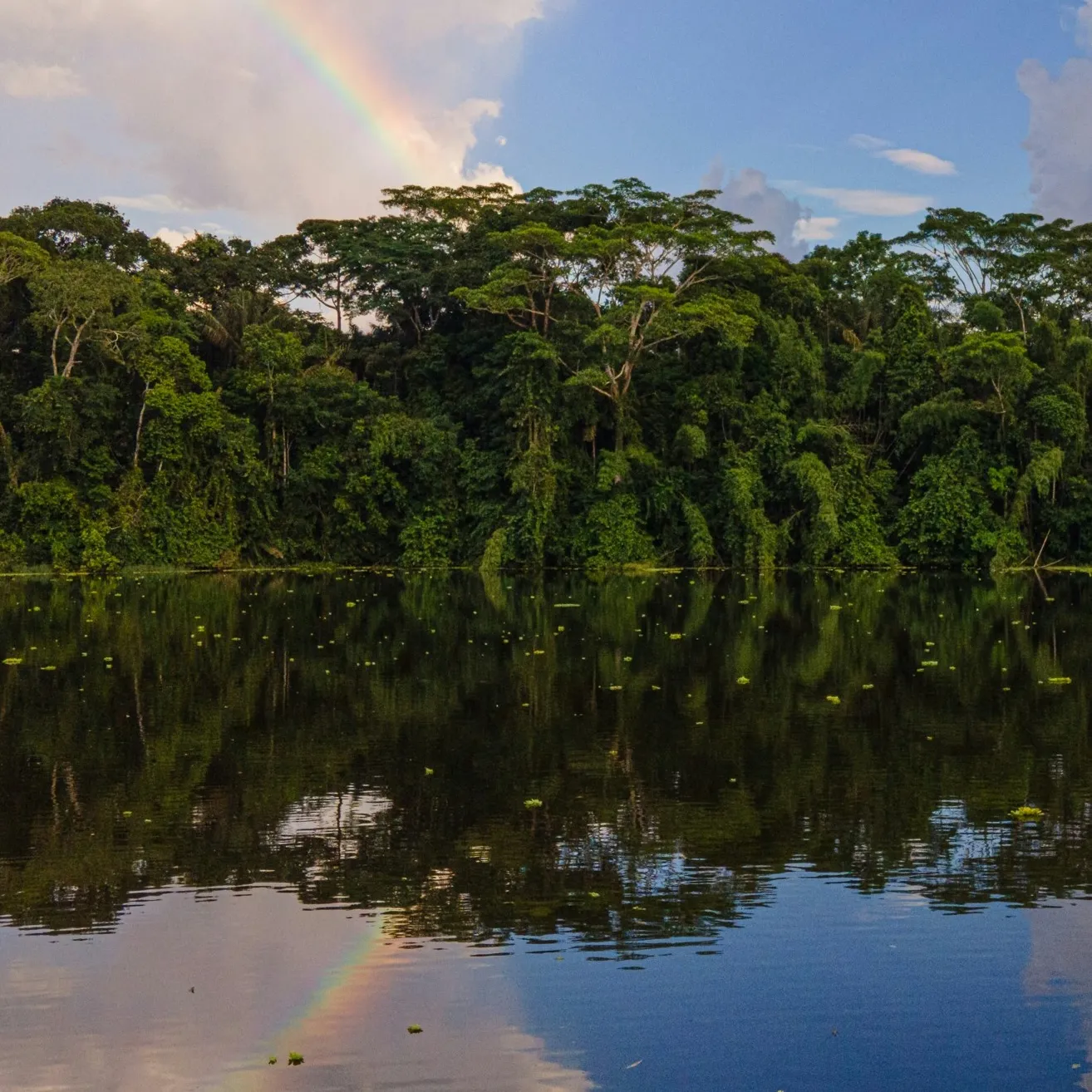
The setup of State of Wonder really drew me in: there’s a scientist, Dr. Swenson, who has gone into the Amazon jungle to develop some kind of miracle drug, but she’s stopped communicating with the Big Pharma bosses who hired her. The company dispatches another researcher, Anders, to find her, but months later, Swenson sends the shocking news that Anders is dead. Now, it’s up to his colleague and friend, Marina, to follow him and investigate the circumstances of his demise.
What seems to be a plot-driven thriller slows down quite a bit. Swenson does not want to be found, and Marina doesn’t seem to try very hard to advance her mission. She just gets stuck in the town adjacent to the jungle, distracted by the odd Australian couple who Swenson has hired as assistants. This middle section really dragged for me and felt like a needless narrative detour.
Things get more interesting when we do finally meet Swenson, along with Easter, a deaf indigenous boy who she’s taken under her wing. I enjoyed the character dynamics between the two scientists: it turns out that Swenson taught Marina in medical school, and even though they’re both professionals now, Marina still acts in a deferential way towards the older woman. And Swenson herself has a brusque, no-bullshit manner that I found entertaining.
I started the pasttwo years with what I called “optimistic non-fiction reads”; it was kind of a coincidence and I resolved to continue the trend annually. I don’t think that Searches by Vauhini Vara quite fits the bill, but I’ll try to give the most hopeful interpretation I can.
This book was born from “Ghosts”, an article published in The Believer magazine. In it, Vara prompts OpenAI’s GPT-3 with the start of a piece of writing about her sister’s death from cancer. GPT completes the story, using the “knowledge” it has gained from consuming and training on a vast corpus of writing. Then, she repeats the original prompt, adding a few more sentences to her story, and again, GPT attempts to finish the piece. Vara repeats the exercise nine times, and with each iteration, she writes a bit more of her truth. GPT’s completions vary wildly, sometimes giving a happy ending where her sister survives, other times inventing a wistful memory from their childhood, and yet other times spiralling into gibberish.
It’s a powerful piece and worth reading on its own. Expanded into a book, Searches explores the history of the Internet age, and how tech companies take their users’ data to relentlessly drive profit. The biggest asset of companies like Alphabet, Meta and Amazon is what they know about us, and this business model has evolved into the current trend of large language models, whose knowledge consists of basically all text on the Internet.