Late Fame
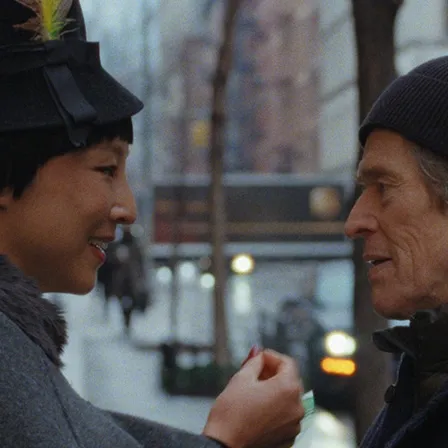
Late Fame tells the story of a postal worker, Ed Saxberger, played by Willem Dafoe, who used to dabble in poetry when he was young. His writing career was limited, and he apparently only published one book before turning to a more ordinary life. One day, he meets a young man named Donovan, who has discovered his book, and hopes to pull Ed into his circle of quirky artists.
I enjoyed watching the film, which is well-acted and comforting. I’m used to seeing Dafoe in wilder, over-the-top roles, so it was nice to see him play a regular nice guy. The lifestyle of the characters, where they hang out in New York lounges and cafes, talking about writing, is one which I have dreamt of living. Being creative is something that I personally value, but have struggled with balancing it against the demands of “adulting.” The Dafoe character chose the responsible route as well, but the movie shows that there’ll always be an artistic side to him, waiting to express itself, and that’s a message that I find heartening.
Bugonia
I gave immense credit to the actors in this film, especially Jesse Plemons, whose character Teddy abducts the CEO of a pharmaceutical company (played by Emma Stone), believing that she’s an alien here to invade/destroy Earth. He’s scary and dangerous, but there are moments where you feel bad for him. He really is a victim of corporate greed, and his sadness and desperation shows through his performance. He has a right to be angry, and whenever he faces off against Stone’s CEO character, the tension is through the roof.
Having said that, I can’t say the film totally held my attention: structurally, it felt a bit repetitive, with the aforementioned face-off scenes occurring multiple times. In each one, Teddy accuses the CEO of her evil alien plot, and she tries to deny and deflect him, until he gets so pissed off that he explodes into violence. Again, these scenes are well-acted and emotionally effective, but I didn’t feel like the story was moving forward.
Omaha
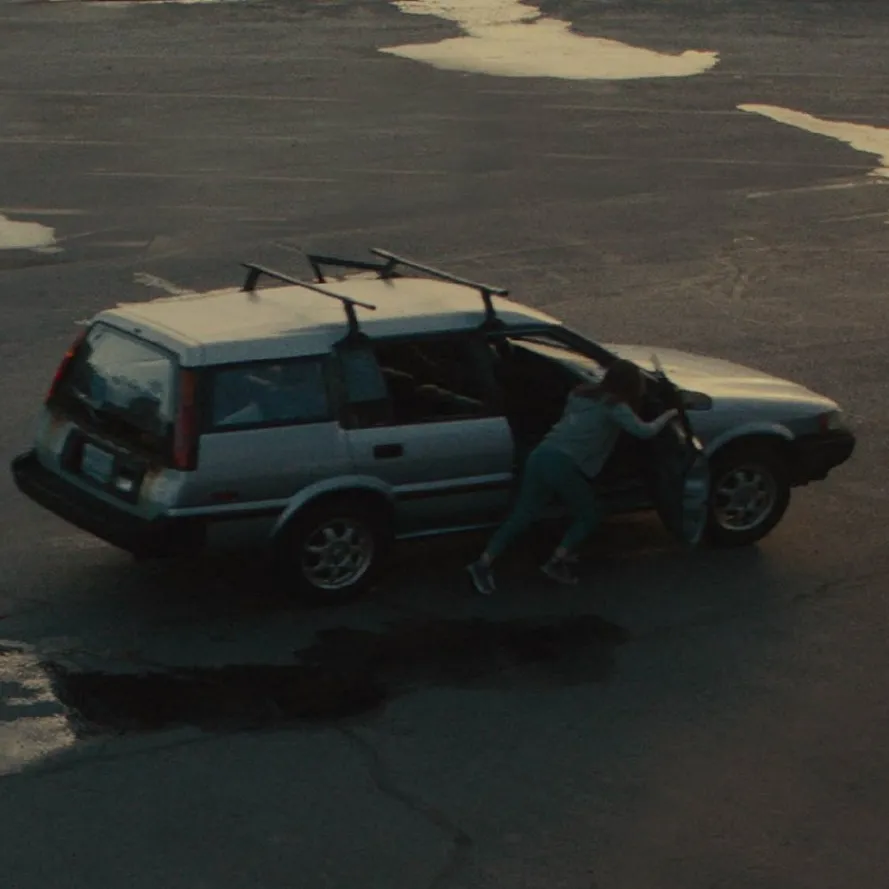
Omaha starts with a father waking up his two kids and wrangling them into their old busted car in a big hurry. They’ve been evicted from their home and as they drive away, there’s a real sense of dread. I, as the viewer, already knew within the first five minutes that it wasn’t going to end well for them, and I spent the (mercifully short) runtime of the film holding my breath and waiting for the ultimate tragedy to be revealed.
The family visits various pit stops and motels along the way to their unknown destination, and the father tries and barely succeeds at pretending that everything is fine. The three performances are the highlight of the film. I often have a hard time with child actors: they’re not always believable, simply because they haven’t had the time to hone their skill; but, when they are convincing, I worry that it’s because they’re experiencing the emotions for real, too young to know that it’s only pretend. Omaha falls in this latter camp, and because of the traumatic circumstances depicted in the film, I hope the two kids (Molly Belle Wright, Wyatt Solis) are okay.
I have no reservations about the performance of John Magaro as the father. The film doesn’t make it clear how the family ended up in trouble, but it doesn’t matter, because he embodies the desperation and fatigue and pain of the backstory. It’s all in his eyes and the way he breathes.
The movie ends with a title card that explains some real-life context. I won’t spoil it but you can read about it here. Omaha shines a spotlight on a specific social issue, and transforms it into an emotional experience. It’s a tough but edifying watch.
H is for Hawk
I just finished reading a short story collection which featured two tales about men who become obsessed with a deer and a chicken, respectively. In my review, I flirted with writing a meme-y joke—“men will literally develop crushes on animals instead of going to therapy”—but I omitted it because I’d rather not engage in gender stereotyping. It turned out to be a wise choice because I just saw a movie which applies the same theme to a woman.
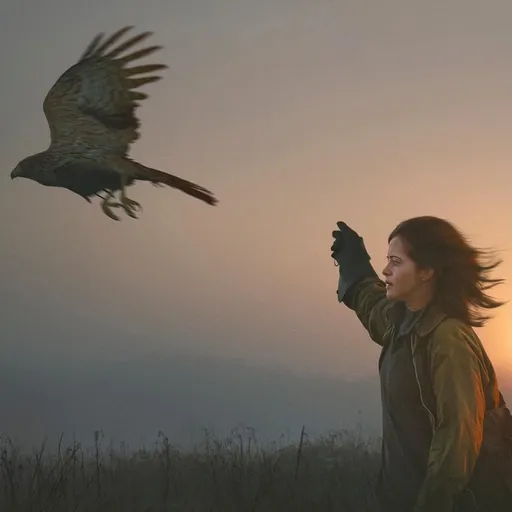
H is for Hawk is adapted from a memoir, and follows Helen (played by Claire Foy) after her father passes away suddenly. In her grief, she decides to raise a goshawk. They are apparently not easy animals to handle, being driven mainly by the desire to hunt, and Helen finds that bird husbandry doesn’t quite fit into her academic lifestyle. But she sticks to it, despite getting strange looks from her neighbours and family.
One Battle After Another

I loved Magnolia and There Will Be Blood back when they came out, but I have to admit that Paul Thomas Anderson’s films since then have left me a bit cold.
I’m happy to say that One Battle After Another entertained me more than Phantom Thread or Inherent Vice did. I saw it in IMAX and it was worth it for the close-up performance moments alone, especially by Sean Penn. His character is strange and twitchy and seems deformed somehow, and those quirks really come through when his face fills my entire field of vision.
There’s more action in this than PTA’s usual fare, including a brilliant car chase scene that features rolling desert hills. What starts off as a visual flourish—hypnotizing POV shots that follow the ups and downs of the road—becomes a tactic that a character uses against their pursuer. I would have cheered out loud if I were the type of person to do that.
What I’m struggling with, though, is the politics of the movie. The film depicts a conflict between characters from the extremes of the political spectrum. On one side is a terrorist group, committing violent crimes in the name of immigrant rights, and against the capitalist establishment. On the other side is a secretive, Santa-worshipping white supremacist club, whose members are in positions of high power and who do not shy away from an assassination or two. Both are shown as being ridiculous, and as far as I know, neither actually exist in real life. The US is a polarized country, and I feel like this movie gives fuel for both sides to say, “This is why they are to be feared.” The world of the movie feels just real enough that it filled me with dread about the future of American society. Which I guess was the point.
Drops of God

Apple TV+ continues to be the place for solid shows that don’t seem to get much attention1. Drops of God follows the two potential heirs of a deceased wine magnate’s estate—one, his estranged daughter; the other, his favourite protégé—as they compete in a series of wine-based challenges. Whoever wins will inherit a fortune, which fortune takes the form of an extensive wine collection. The premise sounds crazy, and it didn’t surprise me to learn that the story is adapted from a manga. The comic-booky feeling is even more pronounced when we realize that these people have a preternatural ability to identify the component flavours of wine just by smelling it, and that they must train to perfect their “powers” before the big “battle.” But throughout it all, the show has the gloss and high production value of a prestige drama. Attaching a serious tone to a hokey premise doesn’t usually work for me2, but it does here!
Footnotes
-
See also: Bad Sisters, Pachinko, Servant, Dark Matter, The Big Door Prize. ↩
-
See also: The Moth Diaries, Bones and All. ↩
Anora
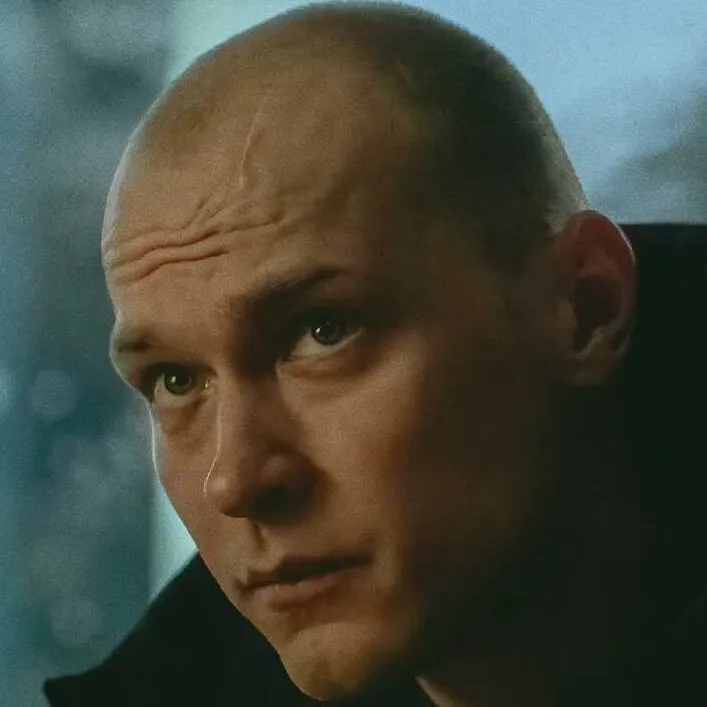
A movie that I admire and respect more than I enjoy. It’s always nice to see an independent film receive such high accolades, including the Best Picture Oscar of 2024. I really don’t have any criticisms with it, and I think cast and crew did a great job.
It’s more a case of the film not matching my vibe, or maybe vice versa, that I didn’t have the right energy to fully enjoy the viewing experience. The first act, wherein Ani and Vanya have a whirlwind romance, is like watching a series of the most fun parties you’ve ever been to. As an introvert, though, no matter how great a party is, I’m still going to want to leave.
Once the conflict kicks in, and the adults who oversee Vanya’s life threaten to break the couple apart, the movie becomes a frantic comedy of errors. Characters are almost always yelling at each other. It’s funny, in a Curb Your Enthusiasm kind of way, but unlike that show, it’s turned up to 11 for a pretty big chunk of the movie. Larry David at least knew how to mix up the rhythm so that not every scene is a shouting match.
The final chapter of the movie was my favourite: it slows down and gives us a few reflective one-on-one moments between Ani and Igor, one of the “thugs” sent to enforce Vanya’s parents’ wishes. I would have liked the film a lot less if it didn’t have this epilogue, which makes the characters—and we, the viewers—think about everything that just happened, and what it all meant.
Bad Sisters
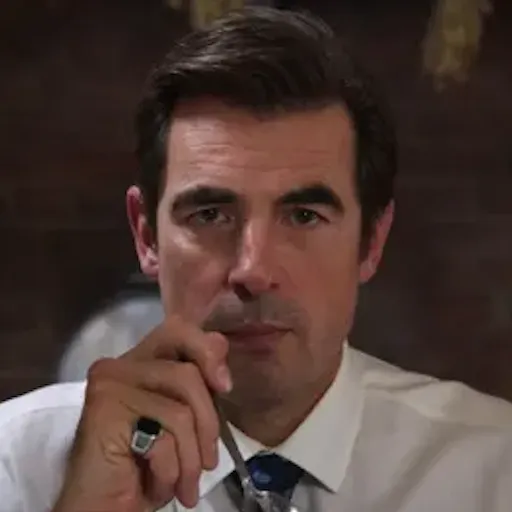
Bad Sisters tells the story of five sisters, one of whom is married to a crappy husband. The other four sisters all hate him, and they hatch a plot to kill him. The show follows two timelines: it starts with the man’s funeral, and depicts the aftermath as insurance investigators dig into the suspicious circumstances of his death; and then, via flashbacks, we see the sisters’ plan(s) come together (or not).
The show is a delicate balance between comedy and drama. It has to make us root for murder, and it almost doesn’t work sometimes. The four sisters have really good chemistry, each likeable in her own way, and it’s often funny to watch them interact. But I think the greatest strength of the show is its depiction of the villain, JP. At first, he seems merely rude and disrespectful towards his wife (and everyone else), and I wouldn’t necessarily have described him as abusive for the first few episodes. But as his bad behaviour escalates, the show effectively redefines his belligerence as the tip of the iceberg, just a subtle sign of the deeper abuses going on.
The fate of JP is fully resolved in the first season, and it’s a satisfying story. There’s a second season, but after watching a couple of episodes, I noticed a significant drop in quality, and decided to quit. I think that the consequences of JP’s death tips the scale towards darkness, so that the light comedic tone is no longer convincing, and ends up feeling discordant and awkward.
Black Bag
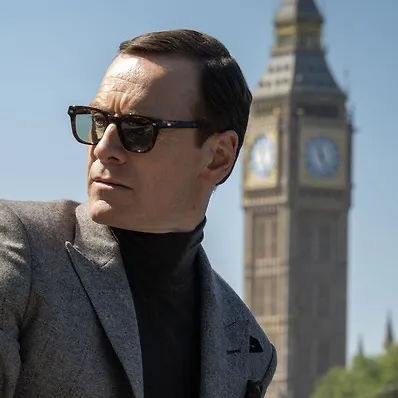
Who do I have more of a crush on, Michael Fassbender or Cate Blanchett? I think it’s a tie.
He’s a spy. She’s a spy. They’re married. There’s a mole in the spy agency. He has to find out who it is. It might be her. The other four suspects are conveniently also paired romantically. What are the HR policies like at spy agencies? Emotional attachments are a huge risk to national security. Relationship discord, an equally huge risk. Fassbender and Blanchett, their relationship: solid. The others, not so much. I’m all for workplace romances, but with far-reaching, world-changing stakes like these, I’m not so sure.
He wears cool glasses throughout. I changed my mind. I think he wins.
Adolescence
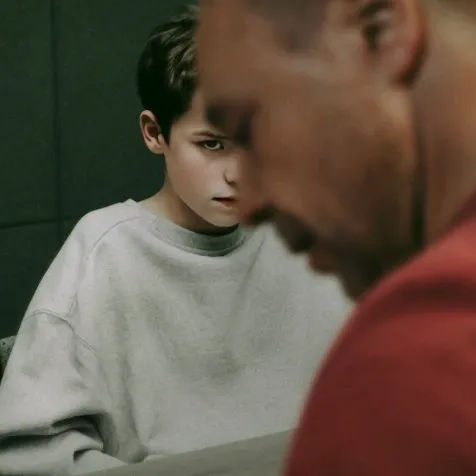
I’m not a parent. That ship has sailed for me, and there was a time when a twinge of envy would come over me whenever I encountered someone with children. A show like Adolescence takes that feeling of envy and replaces it with a deep appreciation for just how hard parenting can be.
The miniseries tells the story of a teenage boy who gets arrested and charged with stabbing and killing his classmate. It explores his motives, his school life, his relationship with the victim—a girl who he was involved with, in a confused teenage way—and especially, the effect of these events on his parents.
The current hype around this show mostly centres around the fact that each of the four 1-hour episodes is filmed in a single shot. I don’t have much to say about that aspect of it, other than kudos to the whole cast and crew for pulling it off. It’s truly impressive.