A Half-Built Garden
by Ruthanna Emrys
-
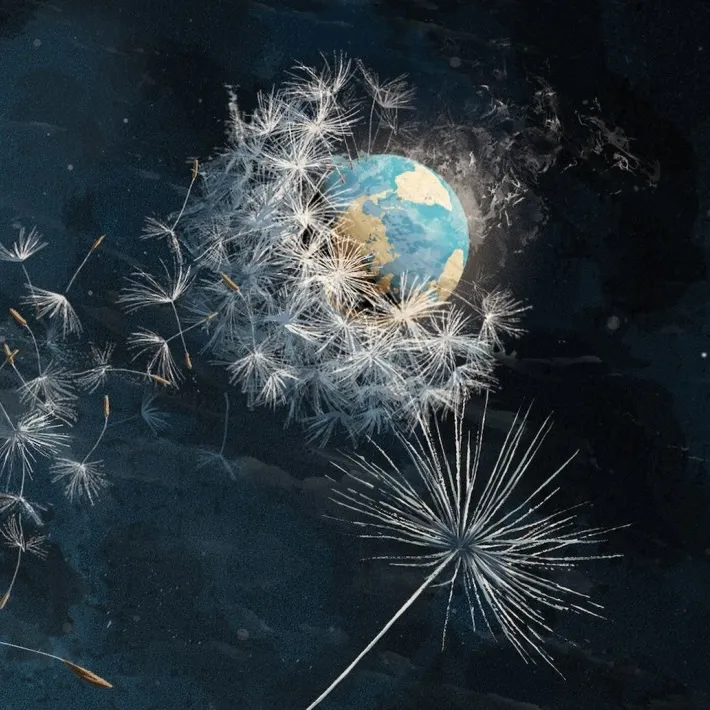
In A Half-Built Garden, a giant spaceship lands on Earth in the near-ish future, and the aliens make contact with humans, proposing to rescue us from the climate crisis by welcoming us to their civilization. There are two species of aliens, and they’ve learned to live in symbiosis onboard space stations, choosing to abandon their respective home planets because of ecological decline. Conflict arises because the humans—represented by the narrator Judy and her family—have a desire to stay on Earth. The systems that created the climate crisis, in this imagined future, have been dismantled, and people are learning how to live in a sustainable society.
Having been a long-time Star Trek fan, I’ve seen many versions of the first contact story. In Star Trek, it usually plays out with the human protagonists meeting a previously unknown species of alien, and then learning a lesson by interacting with the aliens and understanding some crucial difference in their way of life. From a storytelling perspective, even though the human crew is living in a utopia future, they tend to represent the traditions that we hold in the real world, while the aliens represent more progressive ways of life. (For example, see “The Outcast,” in which Riker falls in love with a non-binary person.)
The interesting thing about A Half-Built Garden, which makes it unlike anything I’ve read before, is that the roles are almost reversed. The aliens run their society in a hierarchical way, with mothers holding the most power. It feels familiar enough to our social structures, whereas the human species have changed their society so much that they are the ones that feel alien.
This is most obvious in Judy’s family, which is made up of two couples, each with one child. The two couples have decided to become co-parents, so all four are parents to the kids. While the four adults are not depicted as having romantic relationships with each other, it seems like they hope to reach that point soon. It’s a polyamourous family with a priority on the children.
Another feature of humanity in the novel is that the US government has basically lost its power and exists only in the background. Instead, people have arranged themselves around watersheds. Each group is responsible for stewardship of the ecological area, and they make decisions as a direct democracy where everyone has a say. They manage this by being constantly online (via some kind of neural interface) and voting on issues on what seems like Reddit threads.
I’m really only scratching the surface of the deep world-building that Emrys achieves. I enjoyed the process of reading it and constantly trying to orient myself towards how the world works. I also appreciated the diversity of the cast of characters, which includes trans and non-binary people. There’s even a group who engage in gender fluidity as a social “game”—the way they present themselves on any given day has implications about power and status. Our real world is so uptight about gender that it’s a relief to read something where people simply respect each other’s identity.