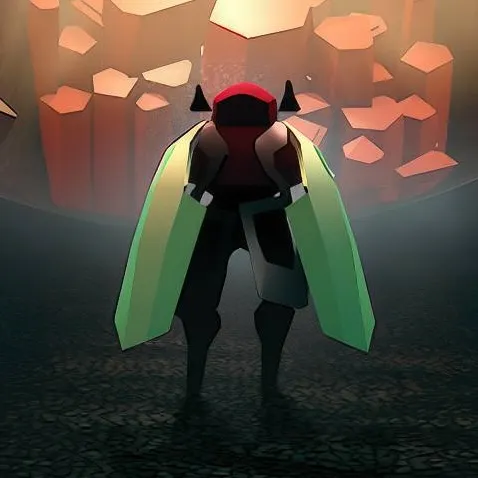
I’ve covered all kinds of media on this blog—books, movies, TV shows, music—but there’s one form of entertainment that I’ve never written about: video games. Ironically, games are probably the hobby that I’ve spent the most time on… and that’s also part of the reason why I haven’t written about them. The truth is, I’ve always been a bit ashamed to be a gamer.

Video games are one of the more geeky realms of geek culture, and I grew up in a time before the geeks inherited the earth. As a kid in school, I learned to avoid revealing parts of myself that would invite mockery: being good at math and computers, enjoying Star (Trek|Wars), still watching cartoons well into my teenage years, and yes, playing video games. You had to make an effort to find people, other geeks, that you could safely be yourself around, because the self that you wanted to be was not the socially accepted norm. For the most part, I did fall in with a group of friends with the same interests, but we would only talk about nerdy stuff when we were at our cafeteria table, away from the “regular” kids.

I’ve also shied away from writing about games because I’ve always had the sense that I play them “too much.” Nobody wants to admit their bad habits in a public forum. Even though I don’t know how to clearly define what amount of play is acceptable, I know that I often feel guilty, that I should be doing something better with my time than gaming.

Read more…

Love of Perdition

Camilo Castelo Branco

-

I recently visited Porto, Portugal, and one of the top attractions there is a bookstore called Livraria Lello. It’s got a beautiful interior with a curvy, kind of sexy, central staircase, making it just as picturesque as the numerous churches that you find in Europe. In fact, it’s become so popular that they charge admission to get in, and there’s a queue of eagerly waiting tourists/customers outside the door. Fortunately, the ticket price is applied to any book purchases, so naturally, I bought something.

The store sells a bespoke series of classic public domain works called “The Pop Collection”, and I picked one by a Portuguese author: Love of Perdition by Camilo Castelo Branco. To add even more local flavour, the novel was supposedly written while the author was imprisoned in a jail just around the corner from the bookstore. The book is small and fit nicely inside my satchel, and I carried it with me for the rest of the trip, reading it while sitting in public squares or park benches. It was cool to come across mentions of places—Viseu, Coimbra, and of course, Porto itself—that I had visited days before.

I’m spending a lot of time talking about the context of my reading experience because sadly, I didn’t enjoy the story itself very much. It follows a young couple who fall in love, but are kept apart because their fathers hold a grudge against each other. Their passion is unstoppable, and they refuse to give each other up, resorting to violence and eventually murder.

Read more…

State of Wonder

Ann Patchett

-

The setup of State of Wonder really drew me in: there’s a scientist, Dr. Swenson, who has gone into the Amazon jungle to develop some kind of miracle drug, but she’s stopped communicating with the Big Pharma bosses who hired her. The company dispatches another researcher, Anders, to find her, but months later, Swenson sends the shocking news that Anders is dead. Now, it’s up to his colleague and friend, Marina, to follow him and investigate the circumstances of his demise.

What seems to be a plot-driven thriller slows down quite a bit. Swenson does not want to be found, and Marina doesn’t seem to try very hard to advance her mission. She just gets stuck in the town adjacent to the jungle, distracted by the odd Australian couple who Swenson has hired as assistants. This middle section really dragged for me and felt like a needless narrative detour.

Things get more interesting when we do finally meet Swenson, along with Easter, a deaf indigenous boy who she’s taken under her wing. I enjoyed the character dynamics between the two scientists: it turns out that Swenson taught Marina in medical school, and even though they’re both professionals now, Marina still acts in a deferential way towards the older woman. And Swenson herself has a brusque, no-bullshit manner that I found entertaining.

Read more…

Searches: Selfhood in the Digital Age

Vauhini Vara

-

I started the past two years with what I called “optimistic non-fiction reads”; it was kind of a coincidence and I resolved to continue the trend annually. I don’t think that Searches by Vauhini Vara quite fits the bill, but I’ll try to give the most hopeful interpretation I can.

This book was born from “Ghosts”, an article published in The Believer magazine. In it, Vara prompts OpenAI’s GPT-3 with the start of a piece of writing about her sister’s death from cancer. GPT completes the story, using the “knowledge” it has gained from consuming and training on a vast corpus of writing. Then, she repeats the original prompt, adding a few more sentences to her story, and again, GPT attempts to finish the piece. Vara repeats the exercise nine times, and with each iteration, she writes a bit more of her truth. GPT’s completions vary wildly, sometimes giving a happy ending where her sister survives, other times inventing a wistful memory from their childhood, and yet other times spiralling into gibberish.

It’s a powerful piece and worth reading on its own. Expanded into a book, Searches explores the history of the Internet age, and how tech companies take their users’ data to relentlessly drive profit. The biggest asset of companies like Alphabet, Meta and Amazon is what they know about us, and this business model has evolved into the current trend of large language models, whose knowledge consists of basically all text on the Internet.

Read more…

Audition

Katie Kitamura

-

It’s impossible to talk about this book without mentioning The One Trick at its centre. You might say it’s a spoiler, so consider yourself warned.

The story is narrated by a nameless woman who works as an actor in a stage play. She meets a young man, Xavier, who claims to be her long-lost son and is seeking a reunion. But she maintains that she never had a son, having had a miscarriage earlier in her life. The third point in the novel’s central triangle is her husband, Tomas, whom she believes is suspicious about her meeting with Xavier because of her past infidelities.

Here comes The One Trick: halfway through the novel, we get a “Part Two” title page, and suddenly, Xavier is indeed her and Tomas’s son. He asks to move back into their home, and they have to re-adapt to his presence. This puts a strain on the family, especially later, when his girlfriend starts to live there too.

The book really drew me in because of how it confused me. Even before the Trick, it makes you question what is reality for the narrator.

Read more…

H is for Hawk

I just finished reading a short story collection which featured two tales about men who become obsessed with a deer and a chicken, respectively. In my review, I flirted with writing a meme-y joke—“men will literally develop crushes on animals instead of going to therapy”—but I omitted it because I’d rather not engage in gender stereotyping. It turned out to be a wise choice because I just saw a movie which applies the same theme to a woman.

H is for Hawk is adapted from a memoir, and follows Helen (played by Claire Foy) after her father passes away suddenly. In her grief, she decides to raise a goshawk. They are apparently not easy animals to handle, being driven mainly by the desire to hunt, and Helen finds that bird husbandry doesn’t quite fit into her academic lifestyle. But she sticks to it, despite getting strange looks from her neighbours and family.

Read more…

A short story collection that I picked up on my recent trip to Italy. The cool thing about it is, the stories are published as “parallel texts,” with the original Italian prose printed on the left (even-numbered) pages, and the English translation printed on the right (odd-numbered) pages. I don’t know Italian, beyond briefly dabbling in Duolingo, but I still tried to scan my eyes across the two pages to make connections between the vocabularies. I think it would be a great learning aid for someone picking up a new language.

It made me think about the process of translation as a whole. For this book, they seemed to have tried to maintain a strict alignment, i.e., the paragraphs start and end at the same vertical position on both sides of the page. I wonder if they were particularly rigorous because of the format of this book. If they didn’t need to present both texts side-by-side, would they take more liberties with sentence length and structure?

Read more…

Now is Not the Time to Panic

Kevin Wilson

-

This was a vacation read, started on my recent trip to Italy, which involved long rides on a tour bus. It was not the best environment for intense attentive reading, and this novel fit the bill. The prose style is simple and sometimes a little bit quirky, which I appreciated for a light read.

The story follows a teenage girl named Frankie. Over the summer holiday, she meets a boy, a fellow outsider, and together they create a piece of art that they photocopy and post all over town. The poster features a poetical phrase1 that she composes:

The edge is a shantytown filled with gold seekers. We are the fugitives, and the law is skinny with hunger for us.

Read more…

Freedom

Jonathan Franzen

-

The emotional core of Freedom, for me, was the love triangle between married couple Walter and Patty Berglund, and Walter’s rock star best friend, Richard. The three met in college, and for Patty, it was the classic choice: lust for the wild and dangerous musician, or the comfort of the responsible nice guy.

The book has an interesting structure, starting with a section told from the perspective of the Berglund’s suburban neighbours. It’s got a gossipy feel, like they see the cracks in the marriage, but can only speculate on the couple’s true nature from a distance.

Then, we get a chapter that’s taken from Patty’s therapeutic journal. She writes about her life story in the third person, but inserts running commentary as “the autobiographer,” often with self-deprecating or rueful reflections. I thought it was a really compelling way to dive into a character.

Read more…

I loved Magnolia and There Will Be Blood back when they came out, but I have to admit that Paul Thomas Anderson’s films since then have left me a bit cold.

I’m happy to say that One Battle After Another entertained me more than Phantom Thread or Inherent Vice did. I saw it in IMAX and it was worth it for the close-up performance moments alone, especially by Sean Penn. His character is strange and twitchy and seems deformed somehow, and those quirks really come through when his face fills my entire field of vision.

There’s more action in this than PTA’s usual fare, including a brilliant car chase scene that features rolling desert hills. What starts off as a visual flourish—hypnotizing POV shots that follow the ups and downs of the road—becomes a tactic that a character uses against their pursuer. I would have cheered out loud if I were the type of person to do that.

What I’m struggling with, though, is the politics of the movie. The film depicts a conflict between characters from the extremes of the political spectrum. On one side is a terrorist group, committing violent crimes in the name of immigrant rights, and against the capitalist establishment. On the other side is a secretive, Santa-worshipping white supremacist club, whose members are in positions of high power and who do not shy away from an assassination or two. Both are shown as being ridiculous, and as far as I know, neither actually exist in real life. The US is a polarized country, and I feel like this movie gives fuel for both sides to say, “This is why they are to be feared.” The world of the movie feels just real enough that it filled me with dread about the future of American society. Which I guess was the point.

letterboxd link

Albert

About Me

Hi! Albert here. Canadian. Chinese.

Writing software since 2001. “Blogging” since 2004. Reading since forever.

You can find me on socials with the links below, or contact me here.