Servant
Seasons 1 and 2

I was so impressed with Nell Tiger Free’s performance in The First Omen that I sought out some of her other work. Servant is a suspense/thriller series on Apple TV+, and also boasts the involvement of M. Night Shyamalan, who I still have a soft spot for, despite the roller-coaster ride that his reputation has (not undeservedly) gone through over the years.
The show has four seasons, and I think it’s worth giving my impressions about halfway through. The premise alone is a great source of suspense: a couple welcomes a nanny, Leanne, to their home to care for their infant, but we find out that the baby is a doll, and that the actual baby had died sometime before. Substituting the child with a lifelike doll was the only way for the mother to cope with the loss, but her delusion is so deep that she went ahead with her plans to hire a nanny. When Leanne comes onboard, strange things start happening around the house, not least of which is the doll’s transformation into—gasp!—a real, live baby!
Leanne (played by Free) carries herself in a creepy, detached way. Her performance is one of the highlights of the show for me. She has the kind of face where the smallest change in expression can switch her vibe from innocence to malice, from fear to aggression, in a split second.
Dark Matter

This show caught my attention because I have fond memories of a road trip with my wife, during which we listened to an audiobook of Recursion, by the same author, Blake Crouch. The common thread between these two stories, and what I suppose is the strength of the author, is a mind-bending, twisty sci-fi plot, featuring a character who is motivated by a specific kind of romantic love, that of loyal, long-term partners. It’s this latter emotional element that makes me a fan of his work.1
It’s an unfortunate consequence of marketing that one usually knows a bit about the premise of a show before watching it. As a result, the first few episodes of Dark Matter feel a little slow, because we already know the basic explanation for what’s going on. I think it would be cool to dive in completely fresh.
Having said that, I need to reveal some spoilers ahead to discuss what I enjoyed about the show.
During the middle episodes, as the protagonist Jason explores the many worlds of the multiverse, the question comes up: knowing that there are infinite variations of every person, where each one made different decisions in their lives, what defines the core of a person? By the end, as those infinite variations of Jason appear in the “home” world, the show answers the question in a fascinating, tragic way: he’s defined by his desire to be with his family, and the one copy that we’re rooting for just happens to have been the one that we’ve been following. They all have equal right to their happy ending, but they won’t be able to get it.
Footnotes
-
I’m reminded a bit of Robert J. Sawyer, who I read a lot when I was younger. ↩
Foundation
Seasons 1 and 2
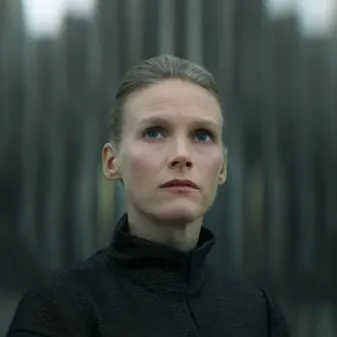
Foundation is based on the classic series of novels by Isaac Asimov. I read them a long time ago, for an undergrad sci-fi literature course, and from what I recall, the adaptation is a loose one.
The show depicts a powerful interplanetary Empire, and a mathematician who develops a method of calculating the course of history, extending thousands of years into the future. He predicts that the Empire will fall, and is allowed to form a Foundation to ease the process of rebuilding afterwards.
It’s a complicated premise and I think the show struggles to stick to its own rules. Characters keep saying that the math is indisputable, that the fall of the Empire is inevitable, but gradually, the Foundation becomes like an organized rebellion, actively attacking the Empire. I don’t need to root for another David against another Goliath, and I would have been more interested by a story that shows how unpredictable “black swans” can turn the tide of history.
Welcome to Wrexham
Seasons 1 – 3

An enjoyable feel-good sports documentary about a Welsh soccer team as they try to ascend the ranks of the English league system. The whole thing is possible because of an injection of Hollywood money, in the form of new owners Rob McElhenney and Ryan Reynolds.
The first couple seasons of the show are a bit more rough, with a tendency to veer off into tangents that feature somewhat narcissistic attempts at comedy by the two “stars.” They also lean a bit too hard on the “football is more than a sport, it’s a way of life” angle, in my opinion. Having said that, by season 3, they’ve found a better balance between exciting game footage and slice-of-life stories about the players and the townspeople.
Curb Your Enthusiasm
It’s hard to believe that I’ve been watching this show for over 20 years. I used to buy the DVDs of the early seasons and watched them repeatedly. For me, the show reached its peak in 2009, the seventh season, which served as a reunion of the Seinfeld cast. Subsequent seasons have felt more forced and contrived, but I’ve been wondering whether the show actually changed, or if it was me who changed. Did it used to be more funny to see Larry David and his co-stars yelling at each other constantly, before social media made it so that the whole world was yelling at each other constantly? Have I just become softer as I age, unable to stomach the sometimes stressful nature of cringe comedy? Did I simply outgrow Larry’s misanthropic mindset, because I learned to love?
In any case, I wish to thank Larry for years—nay, decades—of entertainment, and wish him a happy retirement.
The Bear
Seasons 1 and 2

The tone of this show vacillates between quiet moments of culinary creativity, and brutally stressful shouting matches. I much prefer the former, but I recognize the necessity of the latter. All of the characters in the show are living in the shadow of tragedy, and the process of healing that pain is not always a smooth ride.
Come for the cooking scenes that make you want to try new recipes in the kitchen; stay for the honest depictions of trauma and mental illness.
Succession

I did like the show, but I will mostly be critical here because it’s already received its fair share of praise. I enjoyed it mostly for the comedy. “You can’t make a Tomlette without breaking some Greggs” is an all-time great line.
Where it’s lacking for me is specificity about the actual business. What is it like to run a TV station? How do they manage the logistics of a cruise ship? What kinds of numbers need to be crunched during a merger? We get glimpses of these things, but I guess my expectation for a workspace drama is: I want to see the work. I’m thinking of a show like Mad Men, where you can really tell the difference between a successful ad and a failed one. More recently, The Bear spends a lot of time on showing the characters through their abilities in the kitchen.
In Succession, it all feels kind of vague and hand-wavey, with the details obscured by (admittedly clever) one-liners. To be fair, the focus is on how the characters angle for power, but the show would have been more enjoyable for me had the actual ins and outs of the business been more clear.
The Leftovers

Even though I probably wouldn’t recommend watching it to anyone I know, I absolutely respect the quality and originality of the writing in this show. The actors are also amazing all around, especially Justin Theroux and Carrie Coon, and they deliver many emotional gut punches.
I’ve been listening to the musical score (by Max Richter) since finishing the three seasons, and I have to say I’ve been moved more by the music alone than by the show itself. I think the purity of the score evokes the sadness that permeates the show, but distills it from the frustrations that I felt with the story.
The premise of the show is as follows: one day, in a single instant, two percent of the world’s population disappears with no trace and no explanation. The story picks up three years later, and deals with the people who are left behind. As expected, everyone is in pain. Where the show loses me is the extent to which every character is broken. I was reading the book Humankind at the same time as I was watching The Leftovers, and I found it hard to swallow that the collective trauma in the show has made everyone hateful and hostile towards each other. I want to believe that people would find a way to cooperate and support each other through the darkness.
Sort Of
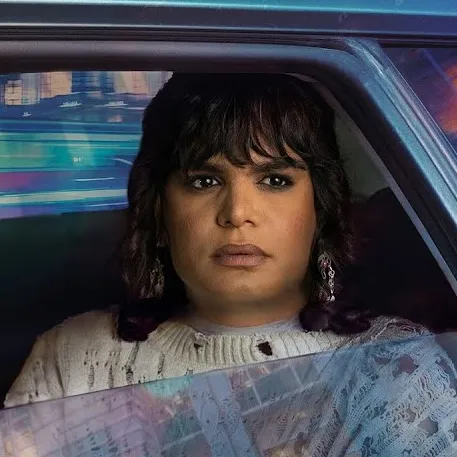
We just finished watching the three seasons of this Toronto-based show about a gender-fluid person. The show started off more as a comedy in its first season, and I felt that it shifted more towards drama as it progressed. I respect the show for not giving into the temptation to follow the typical rom-com happy-ending route. The main character Sabi is defined by their feelings of not knowing where they belong, and I think it’s fair to say that they’re not ready at this stage in their life to be in a long-term relationship.
The plotting maybe relied a bit too much on big shocking events, and didn’t give the characters enough time to process them before moving onto the next twist. You could say that it’s true to life, but I would have liked to see more falling action to balance out the escalations. Still, the show is a valuable lesson in empathy for people who are different.
American Born Chinese
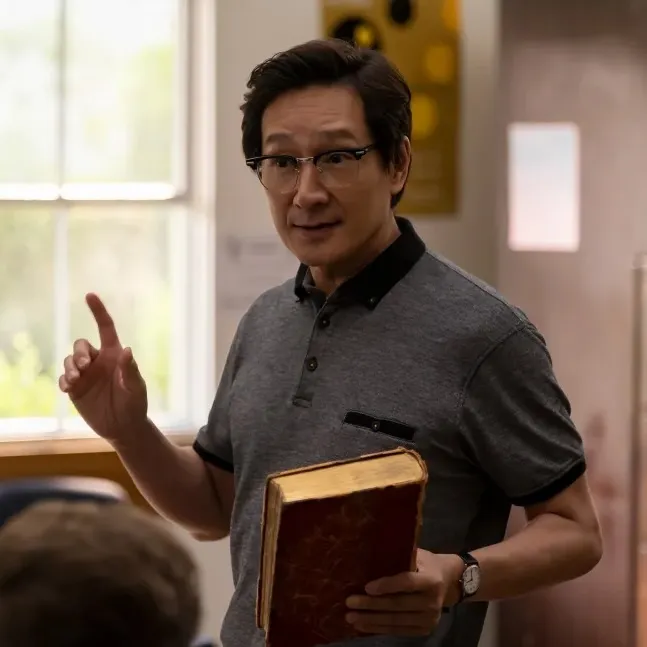
If you’ve got both Michelle Yeoh and Ke Huy Quan in the cast, I’m going to watch it.
Yeoh gets some cool fight scenes as the Goddess Guanyin, and the action choreography in general is pretty good in this show, which transplants the mythology of Journey to the West into a high school setting.
Quan’s role as a former TV sitcom star is a bit odd… his character is completely unrelated to the plot, and he never meets any of the main characters. It serves only as a commentary on Asian representation in media, which is an important message, but quite distracting because of how disconnected it is.